About Me

My photo
Two friends with a shared love for Classic Cocktails, paying homage to the pre-prohibition era. We do parties!

Friday, May 6, 2011

Agavoni

Photo: T.J McLachlan


Spring has arrived, and it seems as though, finally, that is a safe bet to make. With spring comes the switch over in preferred cocktails. Cocktails typically have a seasonal relevance, especially when it comes to Winter (like The Stinger) and Summer (Mojitos, Daiquiris). But what about Spring?


Here at The Volstead Act Craft Cocktals, we are huge fans of Campari. This exceptionally appealing Italian Amaro (or Bitters) is a natural way to celebrate the arrival of Spring. While bitter in taste, it has a light delivery and beautiful colour. It also works in many classic cocktails, or as a stand-alone with soda water and a slice of orange (as an Americano).


You may know the Negroni (equal parts Gin, Campari, Sweet Vermouth). Dating back to 1919, the Negroni was created in Florence, Italy at the Caffe Casoni, as away to strengthen the Americano, by swapping out the Soda Water and replacing it with Gin. We love the Negroni, but we are also very excited about presenting the Agavoni to our menu. It was also a popular choice for the hero, Steve Zissou in "The LIfe Aquatic" (a great film by the way). But this is not a film blog, nor a posting on the Negroni.

One of our favourite books is Boozehound, by Jason Wilson. In it, he introduces to us the Agavoni, attributing it to Bastian Heuser, editor at the German Bar magazine, Mixology. The Agavoni replaces the Negroni's gin with the bright spark of a silver tequila. Accenting the Campari's citrus notes with a couple of dashes of orange bitters, the Agavoni breathes new life into this venerable classic.

To us, this drink tastes like Spring - a season we gladly welcome.
As a side note, and some interesting trivia: during the prohibition era, Campari was considered as medicinal and could be consumed without penalty!


Thursday, May 5, 2011

Tamarindo

Photo by T.J. McLachlan


In honour of Cinco de Mayo, let us present another feature cocktail, the Tamarindo.  Essentially the tamarindo is a variation of the classic margarita, a cocktail which has been a constant on my list of favorites since I first experienced the drink with my brother Ben and great friend Aaron at Colorado's Rio Grande restaurant.  The Rio is well known in Colorado for its delicious steak burritos and margaritas.  The restaurant would close down every afternoon for a siesta, but without fail people would line up down the street waiting to do battle with the Rio's infamous three margarita limit, a battle in which there can be no true winner.


Although the recipe of the Rio marg is a closely guarded secret there was much speculation (often tequila fueled) as to its makeup, and we spent many summer nights trying to recreate the alchemists blend of strong, sweet, sour, and salt.  For awhile we added tree top applejuice to tequila, triple sec, and lime juice in an effort to balance the harshness of the low quality spirits we would often buy.  I even recall having the brilliant idea of freezing the applejuice in ice cube trays so that we could make blended drinks without having unwanted dilution.  

Alas, as time has passed, I've come to realize that the margarita is definitely a case of less is more.  First of all, good spirits are absolutely necessary: the better the base ingredients, the better the cocktail.  Start with 2 parts 100% agave tequila.  For our first event this weekend we'll be using the excellent Cazadores Reposado tequila, a 100% blue agave spirit that is rested for a minimum of two months in new American oak casks.  To that add 1 part Cointreau, the original Triple Sec for which there really is no substitute.  To balance the sweetness of the Cointreau, add 1 part freshly squeezed lime juice - from a lime, not that green bottle hidden somewhere behind your soya sauce and thousand island dressing.

Perfection.

So how do you improve perfection?  You add tamarind.


Our cocktail is named in honour of Jarritos Tamarindo soda, which also pairs exceptionally well with burritos.  To the above mixture of 1 1/2 ounces tequila, 3/4 ounce Cointreau, and 3/4 ounce lime juice, we add 3/4 ounce of our homemade tamarind simple syrup.  The syrup maintains the balance of sour and sweet which is crucial to the margarita, while adding the distinctive flavour profile of tamarind.  The final step to this drink is to add 1/2 egg white.  This produces an incredible velvety frothiness to the cocktail, almost a middle ground between the frozen and rocks versions of the margarita.

And you don't even have to freeze any apple juice...


Wednesday, April 27, 2011

El Presidente

Photo: T.J. McLachlan

The history of individual cocktails during the prohibition era can be quite hazy. Case in point - our third drink being profiled: El Presidente.

During the Great Experiment, American bartenders left the United States to tend bars overseas in exotic countries that were warm and open to alcohol. One of those countries was Cuba where bartenders (whether they were American or Cuban) invented several classic cocktails to assauge the tastes of American tourists. It was at this time that we received the Mary Pickford, the Rosita (for a great glimpse of what the Rosita looks like, check out Andrew's facebook profile), the Daiquiri (including Hemingway's version, as seen in the post below), the Cuba Libra, and, of course, El Presidente.  


Now, it is reasonable to assume that this classic cocktail was name for or after a president, but which one is definitely up for debate. One story is that it was invented by Eddie Woelke, an American Bartender who fled the US to set up shop in Cuba (after trips to Nice and Paris), at the Jockey Club in Cuba for then president Gerardo Machado.

An opposing view is that an unknown bartender at the Vista Alegre Club in Santiago, for an earlier presidente, Mario Garcia Menocal. Whatever the story, it undoubtedly arose in Cuba and its history is murky - but that should be expected as it is a history that goes down in bars, when people are drinking.


(Mario Garcia Menocal)                                  (Gerardo Machado)

The drink calls for aged White Rum (1 1/2 oz), Dry Vermouth (3/4 oz), Orange Curacao (1/4 oz), and Grenadine (1/2 tsp). There is always a temptation to overuse Orange Curacao, but in this case it is best to let the Aged Rum's character take centre stage, paring down on the orange liqueur's sweetness, and finishing the sip with the dry vermouth. Our homemade grenadine is a great touch to this drink, giving the drink its great colour and adding a final flavour to the palate. 

Tuesday, April 26, 2011

Hemingway

Photo: T.J. McLachlan


"Always do sober what you said you'd do drunk. That will teach you to keep your mouth shut. An intelligent man is sometimes forced to be drunk to spend time with fools."


When Ernest Hemingway penned these words in his 1940 Classic, For Whom the Bells Toll, it is reasonable to assume that he toasted his work with one of his many unique cocktails. While Hemingway was not a cocktail mixer himself, he had, much like his ability to select the right words,  the ability to request an excellent blend of flavour in his drinks. 
 
 
In the beginning (around 1939) the drink was named "Daiquiri como Papa" or "Daiquiri a la servaje", then "Papa Doble" and finally it became "Hemingway Especial" after Constante Ribalaigua made the final recipe (whereupon Maraschino Liqueur was added). This cocktail calls for white Rum, fresh lime juice, fresh grapefruit juice and Maraschino Liqueur.
 

Constante Ribalaigua was the legendary bartender at La Florida (also knowns as El Floridita), which became renowned in the early 1900s as Havana's "Cathedral of Cocktails", and frequented by the literary hero for whom this drink is named. We are excited to bring grapefruit juice to the forefront in this excellent cocktail; its funkiness works exceptionally well with the earthy aroma of Maraschino liqueur, and both settle in well with the lime juice and aged white Rum.

We hope Hemingway would approve.

Thursday, April 21, 2011

The Blinker

Photo: T.J. McLachlan
Over the next few weeks we'll be writing about some of the cocktails we've selected for our inaugural event. Some of the drinks are pre-prohibition classics, while others are more contemporary. There will even be an original creation or two thrown into the mix.

Up first is The Blinker. I first stumbled across this recipe in my 1940 edition of Patrick Gavin Duffy's Official Mixer's Manual.

Photo: Andrew Borley
Duffy was the bartender of New York's Ashland House bar for some 40 years and his Official Mixer's Manual catalogued all of the most popular drinks in the years before prohibition, as well as those that became famous in speakeasy's around the country during the "dry years". It is fascinating to see how times have changed. The first 103 pages are dedicated to gin cocktails, while a brief half a page near the end of the book lists only two vodka recipes. Duffy also stresses that, "the barkeeper should be neatly shaved, and his hands and nails should be kept immaculately clean." A rule I try my best to follow as well.

Photo: Andrew Borley
Duffy's original recipe calls for: 1 Jigger (1.5 oz.) Rye
1.5 Jigger Grapefruit Juice
.5 Jigger Grenadine

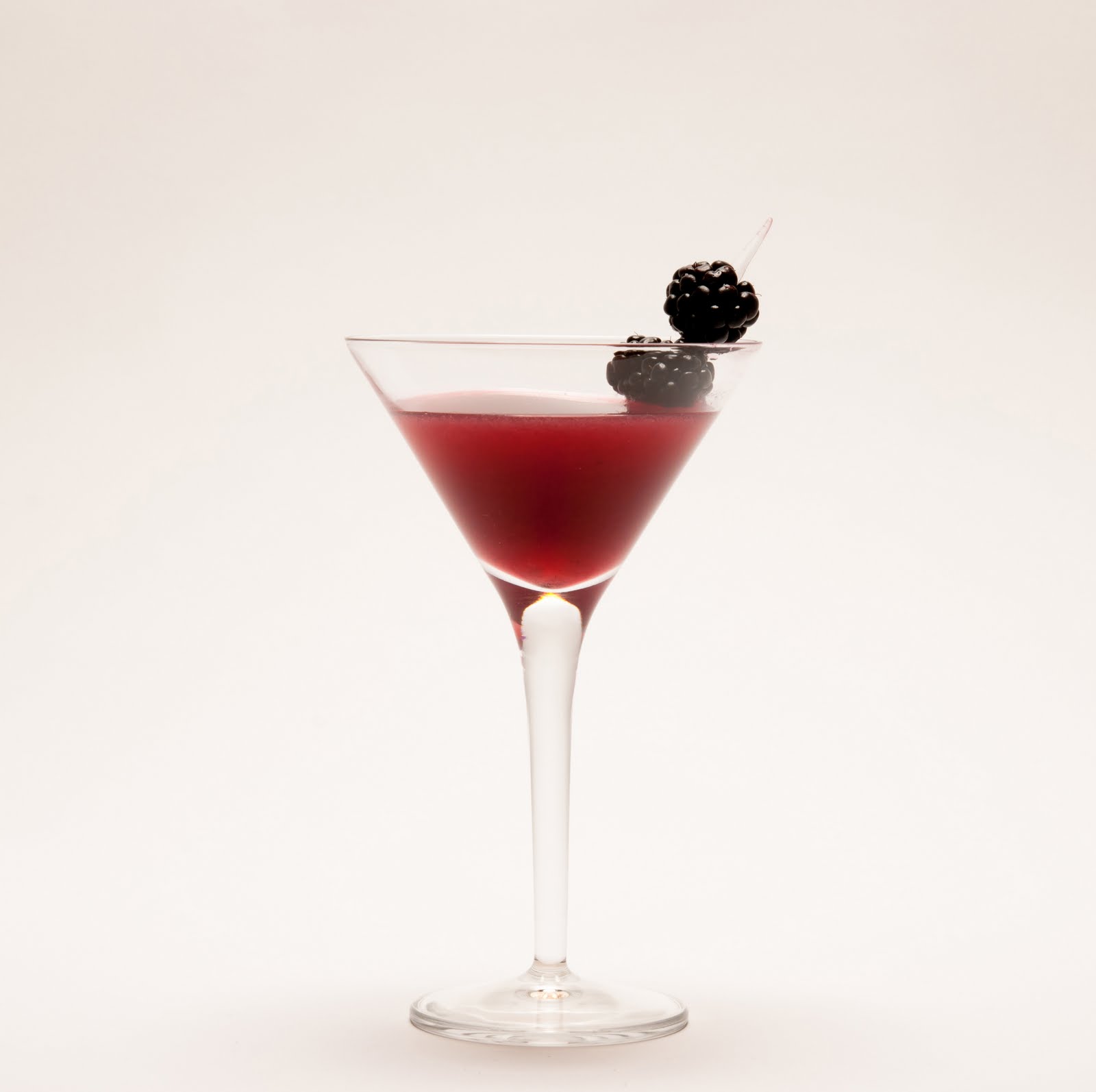
While this sounds delicious, I wanted to use fresh fruit so replaced the grenadine with fresh blackberries and raspberries muddled in 1/2 oz of demerara sugar syrup. I also switched the base spirit of rye for Buffalo Trace Bourbon, a deliciously spicy whisky which is probably a closer match to the American 100% Rye that would have been used at the time, but sadly is difficult to find up here in Canada. 1/2 oz of freshly squeezed grapefruit juice rounds out the mix. Shaken with ice and doubled-strained into a chilled cocktail glass, our new blinker is a fine balance between the dark spice of the bourbon and the tart sweetness of berries and grapefruit. I think it's going to be popular.

Wednesday, April 20, 2011

The Volstead Act Craft Cocktail Service

photo: Library of Congress

Welcome to The Volstead Act Craft Cocktail Service! We are glad you have found your way here. For some time now, the two of us - Andrew Borley and Jeremy Bouw - have been developing our love for Classic Cocktails, excellent flavour, and sharing this love with our family and friends.

Word of our appreciation for cocktails spread throughout our friends and workplaces, and not too long ago we were asked to bartend a 40th birthday party, which we are very excited about.

Given this opportunity, we decided to brand our service and create a few platforms for friends, family, and potential clientele to use to get to know more about us, our love for Classic Cocktails, and what we think we have to offer.

We have named our business The Volstead Act Craft Cocktail Service. We wanted to honour our affinity for the pre-prohibition era and thought what better way than to name ourselves after the Republican who dared to take away the citizenry's access to alcohol. Andrew Volstead was an American member of the United States House of Representatives from Minnestoa, 1903 - 1923, and a member of the Republican Party. His name is closely associated with the National Prohibition Act of 1919, usually called the Volstead Act. The act was the enabling legislation for the enforcement of national prohibition beginning in 1920 (Thank you, Wikipedia...).

So we raise our glasses to Andrew Volstead and take a sip of the fine spirits we know and love.